

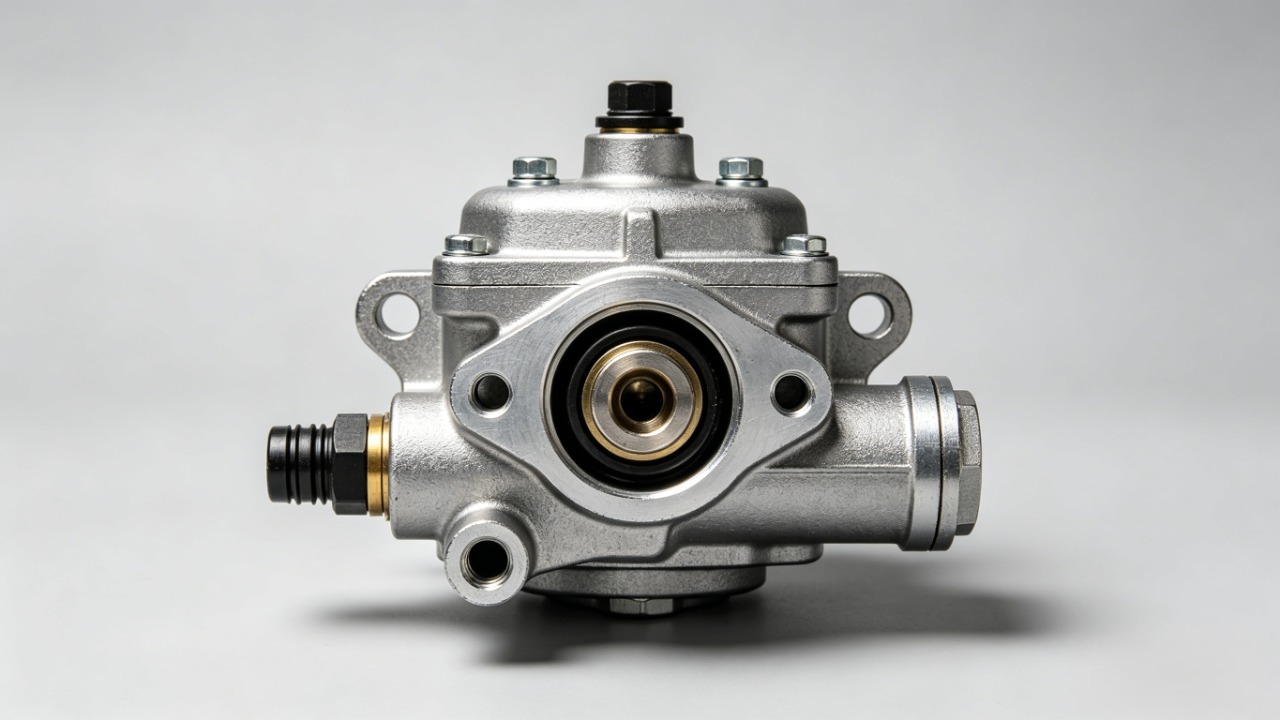
The brake master cylinder is the "heart" of your vehicle's stopping power. Whether you are navigating a heavy-duty Ford F-150, a precision Toyota Camry, or a high-torque Chevrolet Silverado, a failure here means your car doesn't just stop poorly—it becomes a major safety hazard. However, many DIYers mistakenly replace the master cylinder when the real issue is a simple external leak or a bad valve.
Before investing in new hardware, follow this "No-Guesswork" 6-Step Diagnosis Protocol to find the root cause.
Step 0: The "Ability Boundary" Check (Am I Ready for This?)
Before cracking open a brake line on your Dodge Ram or Honda Accord, evaluate your "Ability Boundary".
- The DIY Green Light: If it's a "point-to-point" replacement of external parts like the master cylinder or a sensor, and you have a partner for bleeding, you are ready.
- The Pro Red Alert: If the job involves high-pressure fuel rails or requires an engine hoist, it is time to call a professional shop.
Step 1: The "Neighborhood" Inspection
Ensure the surrounding components are healthy before blaming the master cylinder.
- Check the Vacuum Booster: If the pedal is rock hard on your Toyota RAV4, the problem is likely the Booster or a leaking vacuum hose, not the master cylinder.
- Rule out External Leaks: Inspect your calipers and wheel cylinders for wetness. If you find a leak at the wheel, the hydraulic pressure is escaping there.
- Diagnostic Note: If the wheels are dry and the booster is functional, the master cylinder is the primary suspect.
Step 2: Querying the ECU "Brain
Modern vehicles often identify pressure drops before the driver does.
- Red "BRAKE" Light: This usually indicates low fluid levels or a failed level sensor in the reservoir cap.
- ABS Codes: Use an OBD-II scanner to check for specific pressure-related codes.
- Diagnostic Note: This confirms if the sensor is working, though the mechanical "heart" of the cylinder might still be failing.
Step 3: The "Static Pressure" Stress Test (Trusting Your Foot)
This is where you find the "smoking gun" evidence of internal failure.
- The Slow Sink: At a red light, if the pedal slowly creeps toward the floorboard under steady pressure, you have confirmed an internal leak where fluid bypasses the internal seals.
- The Pull Test: If the car pulls sharply to one side during braking—a common issue on a high-vibration V8 like the GMC Sierra—check for a clogged Brake Hose or a seized caliper.
Step 4: Visual Evidence (Finding Ironclad Proof)
Look for physical proof to lock in your repair decision.
- The "Booster Seep": Inspect the junction where the cylinder meets the black round booster. Bubbled paint or wetness here indicates a failed rear seal.
- Dark Fluid Contamination: If the fluid looks like dark coffee or contains black specks, the internal seals are literally falling apart.
- Diagnostic Note: At this stage, you can be 100% sure the master cylinder requires replacement.
Step 5: Matching the Fix to the Failure (What to Buy)
| If You Discover... | What It Means | Recommended Action |
|---|---|---|
| Pedal sinks, but no external leaks | Internal seals are shot | Replace Master Cylinder |
| Wetness at the booster junction | Rear seal has failed | Replace Master Cylinder |
| Car pulls to one side while braking | Clogged Hose or stuck Caliper | Inspect Hoses & Calipers |
Pro-Tip: Disc vs. Drum Brakes
- Drum Brakes (Rear): On vehicles like a Nissan or older BMW, a wheel cylinder can leak inside the drum without leaving a puddle on the ground. Always pull the drums to verify they are dry.
- Disc Brakes (Front): These are prone to "pulling" if a Brake Hose is old and clogged, which prevents fluid from flowing back correctly.
Summary
By following this 6-step protocol, you move from "guessing" to "knowing." Using Step 0 to determine your ability and Step 5 to select the exact SKU bundle significantly reduces return rates. Always use our Advanced YMM (Year-Make-Model) Tool to verify your specific submodel and engine trim among our 10,000+ SKUs for a guaranteed first-time fix.