

Sometimes, even a professional-grade installation doesn't immediately clear every symptom. In the world of automotive repair, persistent issues are often triggered by "upstream" environmental factors or a need for a final system sync. If you've installed your new headlight assembly and things still feel a bit "off," use these expert FAQs to track down those hidden faults.
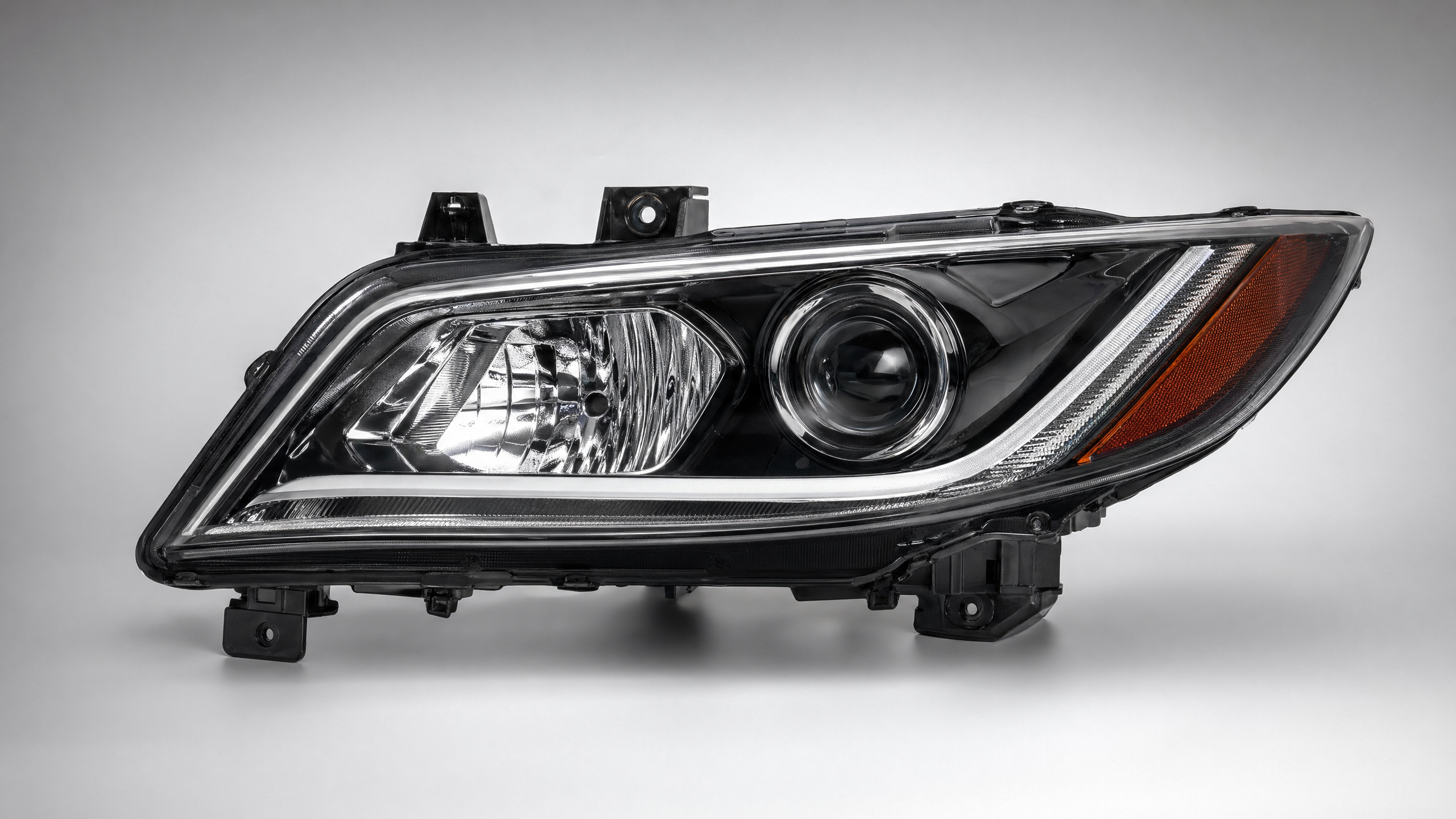
1. Beams, Alignment, and Patterns
"My new headlights are bolted in, but the beam is pointing at the ground/trees. Is the housing defective?"
- The Reality Check: Most assemblies come "rough-aimed" from the factory, but they require a "Final Calibration" once they are mated to your specific chassis.
- The Fix: Park your vehicle (like a Ford F-150 or Toyota RAV4) 25 feet from a flat wall on level ground.
- The Adjustment: Use the manual adjustment screws on the back of the housing to align the "Cut-off Line" as specified in your owner's manual.
- Advanced Tech: For vehicles equipped with AFS (Adaptive Front-lighting), such as a high-trim BMW 3 Series, you may need an OBD-II scanner to "center" the internal motors.
"The light pattern looks 'scattered' or blurry on the road."
- Check the Bulb Seating: If the bulb is even 1mm off-center, the focal point of the reflector is ruined. Ensure it is locked into the proper "click" position.
- Don't Forget the Film: Double-check that you've removed the thin, clear protective shipping film from the lens. It's easy to miss, but it will absolutely distort your beam pattern.
2. Fogging and Moisture
"I see fog or moisture inside my brand-new headlight. Does it have a leak?"
- The Physics of Condensation: New assemblies contain "New Part Air," which naturally holds a small amount of humidity.
- Normal Breathing: Small amounts of fog that clear up after 20 minutes of driving are usually normal as the unit "breathes".
- The Red Flag: If you see actual "puddling" or large water droplets, check your Breather Caps and Rubber Gaskets.
- Seal Inspection: If these "Flexible Seals" weren't seated perfectly during your prep phase, moisture will find its way in.
3. Warning Lights and Flickering
"The new assembly works, but I still have a 'Headlight Out' warning on my dashboard."
- Logic Self-Check: Modern Body Control Modules (BCMs) on cars like the Toyota Camry often store "Fault Codes" even after the bad part is gone.
- The Solution: You must perform a "Validation Loop". Use a diagnostic tool to clear old DTCs (Diagnostic Trouble Codes) and execute a fresh drive cycle so the computer recognizes the fix.
"My LED daytime running lights (DRL) flicker or won't turn on."
- The 'Upstream' Check: This is usually a "Signal & Data" issue. Inspect the harness plug for any "Thermal Damage" or corrosion that might be hindering the connection.
- Hard Reset: Ensure you disconnected the battery during the install. Some ECUs (like those in a Jeep Grand Cherokee) require a "Hard Reset" to recognize the new electronic load of an LED driver.
Why "First-Time-Fit" Sometimes Needs a Second Look
Think of your headlight as a Functional Structural Assembly—a hybrid of a plastic shell and sensitive electronics. If a problem persists, it is rarely the "Structure" (the housing) at fault. Usually, the culprit is either a "Flexible Seal" (installation seating error) or the "Electronic Control" (lingering dashboard codes). By following these troubleshooting steps, you can avoid the cost of unnecessary rework and get back on the road safely.