How to Diagnose a Bad Ignition Coil: Symptoms, Testing & Fixes | DIY Guide
In the intricate dance of an internal combustion engine, the Ignition Coil is the high-voltage performer. It takes the modest 12V from your battery and transforms it into a staggering 20,000V to 50,000V burst. But when this performer stumbles, the entire engine loses its rhythm.
Many DIYers fall into the "parts cannon" trap—replacing coils only to find the issue was a simple spark plug or a faulty ECU driver. Follow our 6-Step 'No-Guesswork' Diagnostic Guide to pinpoint the exact failure—before you spend a dime on parts you don't need.
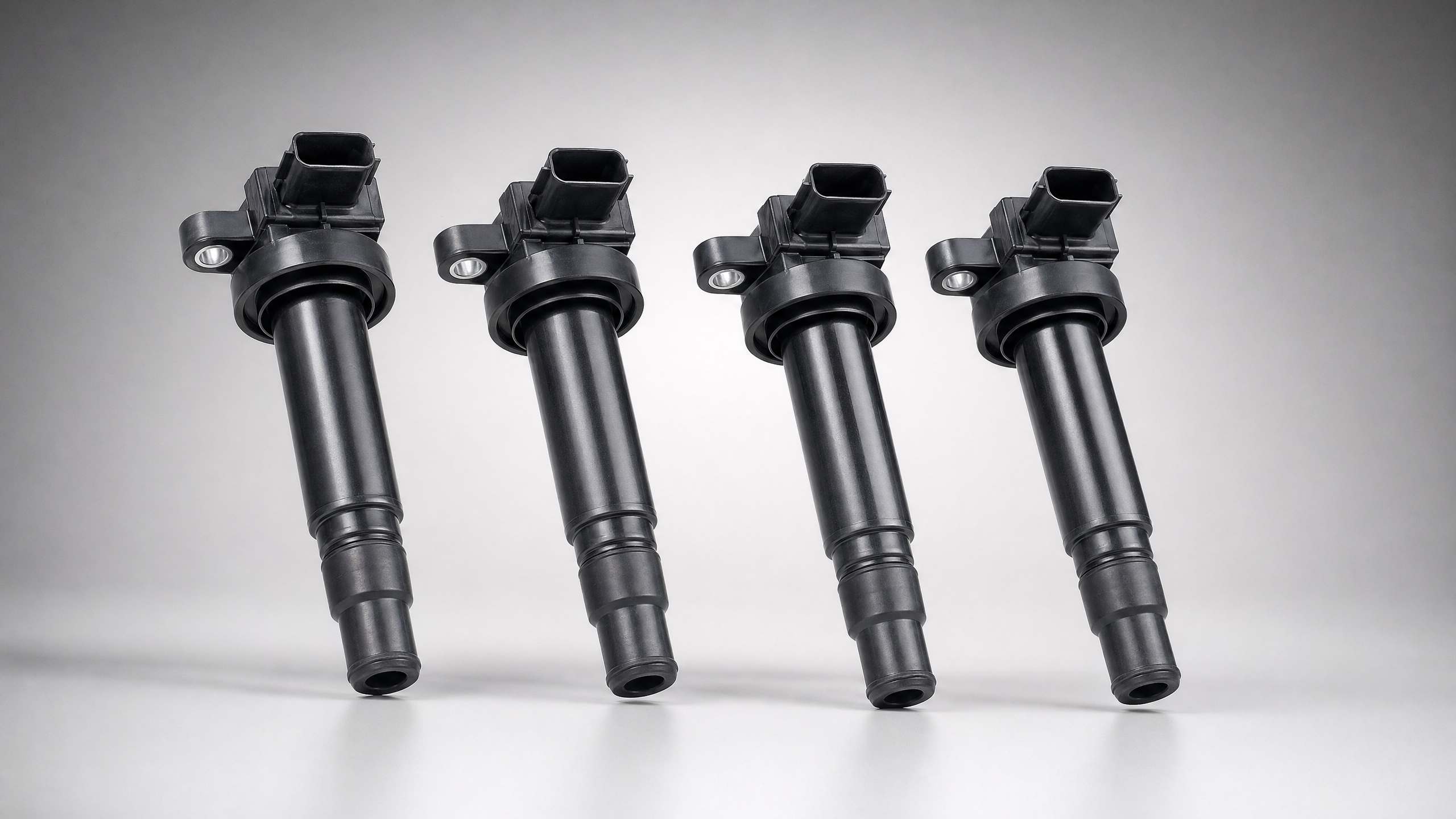
Red Flags: Common Ignition Coil Failure Symptoms
Before you pop the hood, look for these early signs of a failing coil:
- Rough Idling: The car feels like it's shivering while stopped at a light. This is frequently reported by owners of high-mileage Ford F-150 or Honda Civic models.
- Stumbling under Load: The engine jerks or hesitates specifically when you accelerate hard or go uphill.
- The "Check Engine" Light: Often flashing, indicating a severe misfire that could melt your catalytic converter.
- Sudden Stalling: The engine dies unexpectedly, especially after it has warmed up (heat often triggers coil internal short-circuits). Commonly seen in older GM Silverado or Toyota Camry engines when the coil's internal insulation degrades from heat.
Our 6-Step 'No-Guesswork' Diagnostic Guide
Step 0: Is This a DIY Job? (Difficulty Check)
Before getting your hands dirty, assess the "Readiness" of the task.
- DIY Green Channel: If coils are easily accessible on top of the engine, a standard design in inline-4 engines like the Honda Civic, Toyota Corolla, or Ford Fusion and you have a basic socket set and OBD2 scanner.
- Red Alert: If Coils are buried under the intake manifold, common on the rear cylinder banks of V6 engines like the Toyota Camry V6, Honda Odyssey, or Ford Explorer. Also, if specialized pullers are required, the safety risk and complexity are high.
Step 1: Check for External Damage & Leaks
Ensure the engine isn't "sabotaging" the coil.
- Power Supply: Use a multimeter to verify the coil receives a stable 12V to 14V. Low voltage from a dying battery or alternator can mimic coil failure.
- PCV & Oil Leaks: Inspect for oil in the spark plug wells - a common issue in high-mileage BMW 3-Series or Nissan Altima engines. Leaking valve cover gaskets can submerge a coil in oil, causing "chemical poisoning" and electrical shorts.
- EGR Check: A stuck-open EGR valve causes lean misfires that stress the coil to its breaking point.
Step 2: Scanning for Misfire Codes (DTC Analysis)
Your car’s Computer (ECU) acts as a digital witness. Using an OBD2 scanner, you can retrieve Diagnostic Trouble Codes (DTCs) that provide "electronic fingerprints" of the failure:
- The "Spark" Codes (P0300 - P0304): These indicate a cylinder misfire. It means the fire is out, but we don't know why yet—it could be the coil, the plug, or fuel delivery.
- The "Circuit" Codes (P0350 - P0354): This is the ECU Exclusion Key. These codes mean the ECU detected an electrical fault in the wiring harness or its own internal driver circuit.
Expert Tip: If you drive a GM Silverado or GMC Sierra and pull a P0351 code, it often points to a wiring harness connector issue rather than the coil itself.
Step 3: The "Listen & Smell" Test (On-Car Inspection)
Use your senses to narrow the physical search.
- The "Ticking" Sound: Listen for a rhythmic snap. This is "arc-over," where electricity is jumping from a cracked coil body to the engine block instead of the spark plug.
- The Smell of Unburnt Fuel: A strong gas scent from the exhaust confirms the fuel is there, but the "fire" is missing.
Step 4: Pull the Coil for "Ironclad Proof" (Physical Evidence)
Remove the coil for the "Ironclad Proof".
- Cracks & Carbon Tracks: Look for tiny white or gray lines on the plastic stalk (signs of high-voltage leakage).
- Burn Marks: An iridescent blue or purple tint on the metal components indicates severe overheating.
- The Swap Test (Validation): Move the "suspect" coil to a different cylinder. If the misfire code follows the coil (e.g., moves from P0301 to P0302), for modern engines like the Jeep Grand Cherokee or Dodge Ram 1500, the coil is definitely dead. If the misfire stays put, you have a spark plug or mechanical engine issue.
Step 5: Matching the Fix to the Failure (What to Buy)
This final step ensures you get the exact match for your vehicle. Before purchasing, always use a Year-Make-Model lookup to confirm compatibility. If your diagnostic Step 1 or Step 4 revealed systemic issues—like oil leaks or multiple misfires—replacing just one coil is a temporary fix. Match your purchase to your specific failure to ensure a permanent repair.
| Diagnosis Conclusion | Recommended SKU Solution | Essential Accessories (Prevention) | |||||||||
|---|---|---|---|---|---|---|---|---|---|---|---|
| High-Mileage Wear (Code followed the coil, rest of system clean) | Individual Premium Coil (Match OEM SKU) | Dielectric grease (prevents future arcing) | Oil Contamination (Oil found in plug well during Step 1) | Professional Kit: Coils + Valve Cover Gasket | Intake cleaner, new spark plug boots | Multi-Cylinder Fatigue (Multiple misfires, high heat signs) | Maintenance Bundle: Full set of Coils + Plugs | Torque wrench (for precise plug seating) | Circuit Code (P035x) | Do Not Buy Coil. Repair Wiring Harness | Electrical contact cleaner, heat shrink wrap |
Know Your System: Ignition Variations by Vehicle Type
Understanding your vehicle's specific layout is vital for a unique diagnosis:
- Modern Coil-on-Plug (COP): Standard on most cars after 2010, including best-sellers like the Toyota RAV4, Honda Accord, and Nissan Rogue. The "Swap Test" in Step 4 is your best friend here.
- Coil-Near-Plug (with Ignition Wires): Common in mid-2000s models like the Toyota Corolla or Chevrolet Impala. Always check the ignition wires first on these older platforms. A "failed coil" is often just a cracked $20 wire leaking spark.
- Waste-Spark / Classic Distributor: One coil fire two cylinders. If two cylinders die simultaneously, the coil is the prime suspect. If only one dies, it’s likely the wire or plug. In older V6 or 4-cylinder engines like the Ford Ranger or Mazda B-Series trucks, the Contact Breaker is the mechanical "brain"—if its points are burnt, the coil will never get the signal to fire.
The Bottom Line: Successful ignition repair starts with diagnosis, not parts swapping. Use an OBD2 scanner to check for circuit codes and perform a Swap Test to confirm the failure. Whether you are fixing a Ford, Toyota, or Chevrolet, always verify your Year, Make, and Model before ordering to match the exact OEM specifications for your vehicle.
Disclaimer: Our Mechanic Advisor provides information for educational purposes only and not as professional automotive advice. DIY repairs involve risks. If unsure, consult a certified mechanic. We guarantee part fitment based on your selected vehicle details, but are not responsible for misdiagnosis or damage resulting from use of this guide.