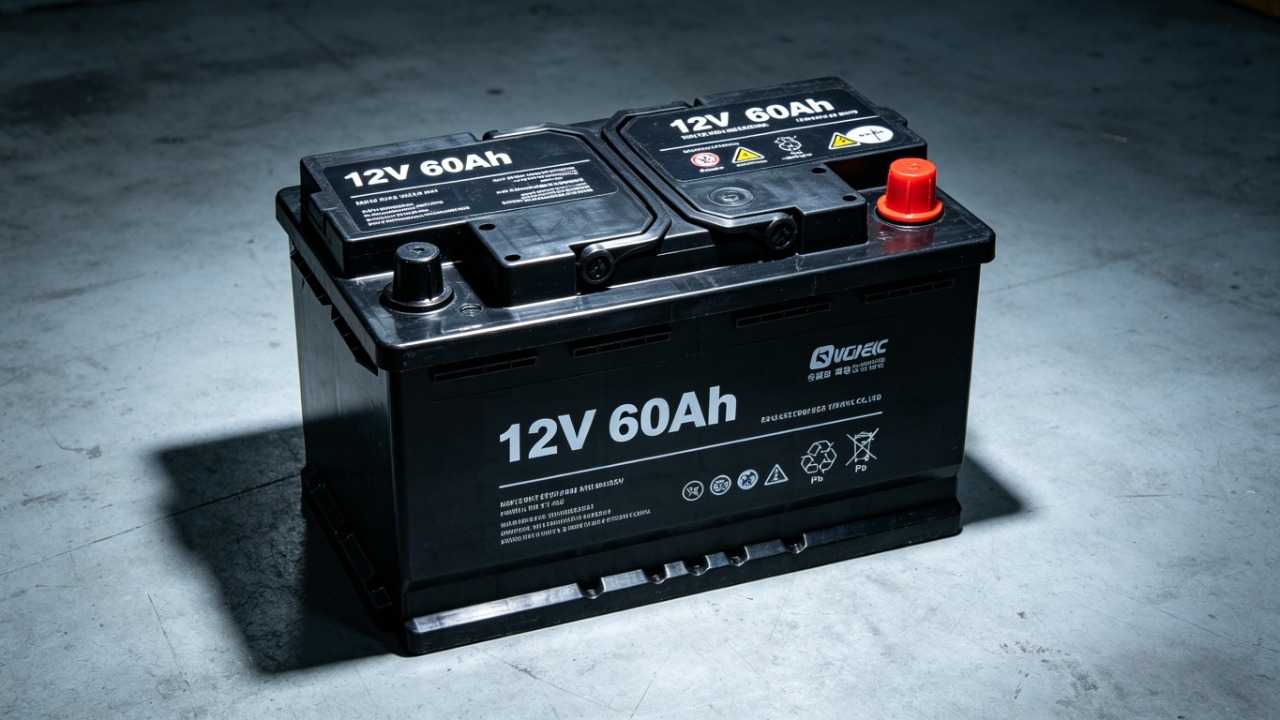
You swapped the part, torque-checked the bolts, and wiped the grease off your hands—but the engine still won't turn over. You diagnosed the issue, followed the repair guide, and installed a premium Starter, Alternator, or Battery.
Yet, the car still won't behave.
If you have already ruled out the battery cables, relays, safety switches, and internal engine mechanicals, the issue likely lies in a Functional Connection or a System Calibration error. Here are the post-install FAQs based on our "First Principles" logic to get your vehicle back on the road.

1. New Alternator: "Voltage is Still Low"
Q: I verified my belt and cables are good, but the new alternator only outputs 12.5V. Is it a dud?
- The Routing Check: Revisit your Locate Phase. Even if the belt looks "fine," double-check your routing photo. In tight engine bays—like those found in a Honda Accord or Toyota Camry—it is easy to misroute the belt.
- The RPM Factor: If the belt is routed over the wrong side of a pulley, the alternator may be spinning at a lower RPM or even backward, failing to hit the 13.8V–14.5V threshold.
- The Calibration Check: Modern ECUs manage charging via a signal wire. If you didn't perform a 20-30 minute mixed drive, the computer may still be limiting output based on "old" battery data.
2. New Battery: "It's Dead Again the Next Morning"
Q: Everything else is ruled out. Why is my new battery draining overnight?
- The Integrity Check: Revisit your Installation Phase. Did you use a wire brush to clean the inside of the terminal connectors until they showed shiny metal?
- The Oxidation Trap: If there is microscopic oxidation between the new post and the old connector, the alternator cannot effectively "push" a charge into the battery, leaving it chronically underfilled.
- The Sensor Check: If your car has an Intelligent Battery Sensor (IBS)—common in the BMW 3-Series or Jeep Grand Cherokee—and you didn't disconnect the negative terminal first during removal, the sensor may be "confused". This prevents the system from properly entering "sleep mode," causing a parasitic drain.
3. New Starter: "I Still Hear a Single Click or Grinding"
Q: My engine isn't seized and my relay is fine. Why won't the new starter crank?
- The Grounding Check: Revisit your Installation Phase. The starter relies on its mounting flange for grounding. If you didn't use a wire brush to de-scale the transmission mating surface, the high-amperage current needed for a "cold crank" cannot find a path.
- The "Single Click" Mystery: Poor grounding often results in the "single click" of a solenoid with no actual motor rotation.
- The Alignment Check: Did you follow the Star Pattern for tightening? If the starter is slightly cocked—even by a fraction of a millimeter—the gear won't mesh with the flywheel. On high-torque vehicles like the Ford F-150 or Chevrolet Silverado, this misalignment causes a loud, metallic grinding noise.

The Final Quality Intercept
If you are certain your physical connections are clean and tight, the most common "missing link" is the Post-Repair Drive Cycle.
A professional repair isn't finished when the last bolt is tight. To ensure the job is complete:
- Clear the historical fault codes with a scanner.
- Perform a 20-30 minute mixed driving cycle.
This allows the ECU's Readiness Monitor to "shake hands" with the new hardware and reset its performance parameters to factory specs.