

When your engine temperature spikes, the instinct is to replace the radiator immediately. However, in professional maintenance, jumping to conclusions leads to high return rates and unresolved issues. Before diving into the diagnosis, look for these common "red flags" on your dashboard or under the hood:
- The Temperature Rollercoaster: If the needle on your 2016 Jeep Grand Cherokee bounces between normal and hot, your radiator may be partially clogged.
- Bright Puddles: Finding a pool of green, pink, or orange fluid under your 2015 Ford F-150 is a classic sign of a cracked tank or leaking seam.
- Engine "Steam": Seeing vapor wafting from the grill of your 2014 Toyota RAV4 usually means coolant is escaping and hitting a hot surface.
- Sludge in the Reservoir: If the coolant looks brownish or oily instead of translucent, the radiator's internal structure might be failing.
By following this protocol, you can confirm if a new radiator is the specific fix you need while filtering out interfering components like thermostats or pressure caps.
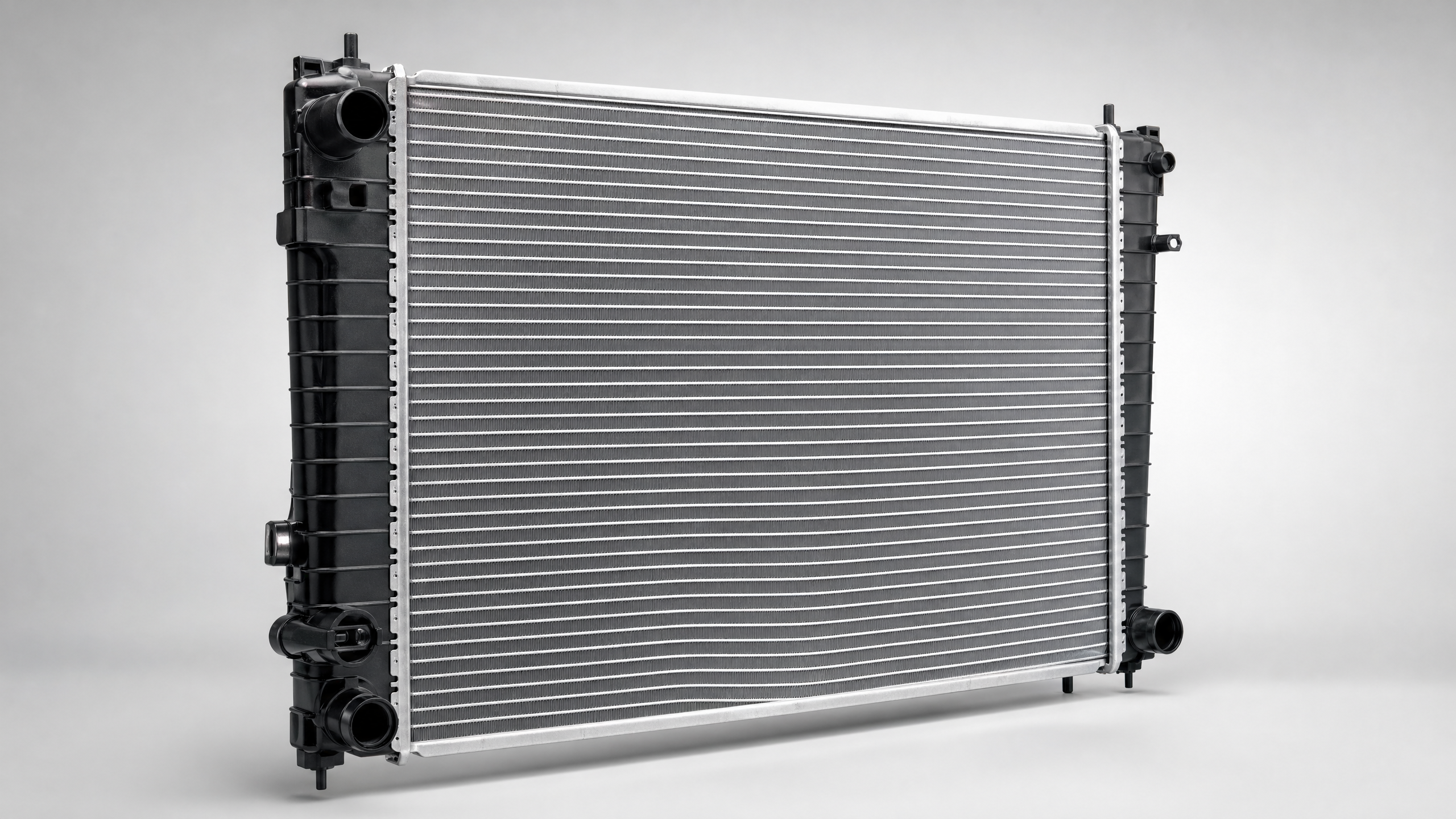
Step 0: Know Your Limits (DIY vs. Professional Repair)
- The DIY Path: If the fault is a "point-to-point" replacement of external parts like the radiator unit or hoses on a 2013 Honda Accord.
- The Major Red Flag: If you find "milky" oil or signs of a deep lubrication system blockage, this indicates a core engine issue requiring a professional overhaul.
Step 1: Check the Easy Stuff First (The Environment Check)
- The Radiator Cap: Inspect the cap's seal and spring tension. A weak cap allows coolant to boil off or "puke" into the expansion tank, mimicking a radiator leak.
- The Thermostat Trap: Feel the upper radiator hose. If the engine is hot but the hose is cold on your 2017 Chevrolet Silverado, the thermostat is stuck closed—your radiator may be fine.
- The Fan Factor: Ensure the cooling fan triggers correctly. Overheating at idle is often a fan or relay issue, not a radiator failure.
Step 2: Scan for Error Codes (Electronic Signals)
- Codes P0128/P0217: While a radiator is a mechanical part, these codes signal that coolant temperature is out of range, providing evidence of a cooling system compromise.
Step 3: Use Your Senses (Hear & Smell)
- The Smell Test: A sweet, syrupy scent (antifreeze) near the front of the grill confirms a leak.
- The Ear Test: Listen for a faint "hissing" sound coming from the radiator’s side tanks or aluminum core on your 2019 Nissan Altima, indicating a pressure leak under load.
Step 4: Look for Physical Proof (The Ironclad Evidence)
- The "Crust" Test: Look for white, green, or pink powdery residue on the radiator fins or at the seams where the plastic tanks meet the aluminum.
- Crumbling Fins: If the aluminum fins are crumbling or severely bent, the unit has lost its heat-exchange efficiency.
Step 5: Getting the Right Part for the Job
Once you’ve confirmed the failure, ensure a "First-Time Fix" by matching your diagnosis to the correct replacement. To guarantee a perfect fit, you must move beyond generic parts and match the replacement to your specific Year-Make-Model (YMM) attributes—including submodel, engine size, and trim level. This ensures that every mounting bracket and hose line aligns exactly with your vehicle's factory specifications.
| What You Found | The Likely Fix | What Else to Replace |
|---|---|---|
| Visible cracks or leaking seams | Radiator Assembly | New Pressure Cap & Hoses |
| Severely corroded or bent fins | Radiator Assembly | Mounting Brackets & Coolant |
| Internal clogging (Cold spots) | Radiator Assembly | System Flush / Descaler |
Summary
By moving from "symptom-swapping" to "root-cause diagnosis," you ensure that a new radiator is the only part you actually need. This systematic approach reduces invalid DIY attempts and keeps your engine running at the perfect temperature.